

Key takeaways:
Historical data shows Bitcoin often outperforms during trade wars and liquidity injections despite initial macro fear.
Resilient mining activity and a shift to net long positions on CME futures suggest professional traders are buying the dip.
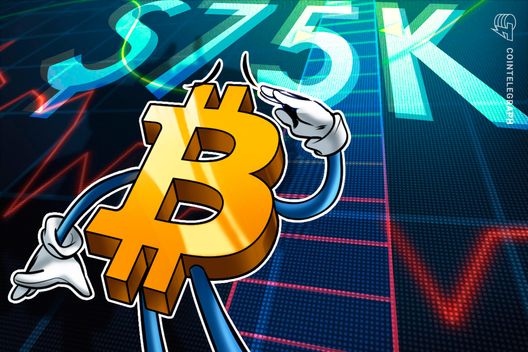
Bitcoin (BTC) traders are becoming increasingly anxious after 18 days of trading below the $75,000 level. Concerns intensified following a retest of $64,200 on Monday, triggered by a retreat in global stock markets. US President Donald Trump’s decision to increase baseline import tariffs to 15% has heightened uncertainty, leading investors to adopt a more risk-averse stance.
While these events appear negative at first glance, Bitcoin has a history of outperforming during bearish macroeconomic shifts. More importantly, risk perception is gradually improving; Bitcoin miners have shown resilience, and professional traders used the recent dip to add exposure.
Bitcoin/USD, April 2025. Source: TradingView
On April 2, 2025, the Trump administration signed an executive order imposing sweeping “reciprocal tariffs” on nearly every trading partner. The situation escalated on April 9, 2025, as additional tariffs were applied to 75 countries, including a 34% rate for China. This move coincided with Bitcoin hitting a five-month low at $74,600, which was followed by a 38% rally over the next month.
Traders choose cash over Bitcoin during periods of uncertainty
The natural instinct for traders during periods of uncertainty is to seek shelter in cash and government bonds. Despite its unique benefits, Bitcoin is not yet considered a safe haven by most investors. However, once the market realizes that governments may be forced to inject liquidity to stimulate the economy, Bitcoin tends to outperform.
Overnight repurchase Treasury securities purchased by the Fed. Source: US Fed
The US Federal Reserve (Fed) lends cash against Treasury collateral to maintain smooth funding markets and settlements. This measure should not be viewed as a direct liquidity injection, as it reflects temporary balance sheet conditions. Nevertheless, peak levels in this indicator — such as the $100…
..