

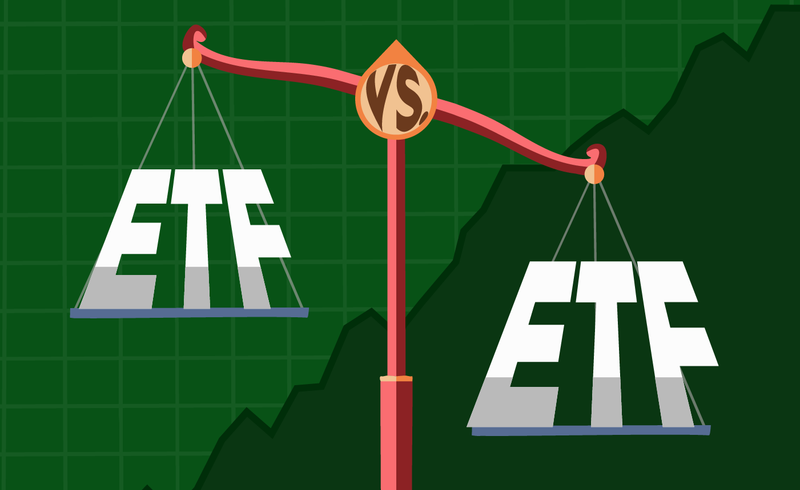
The Vanguard Total Stock Market ETF (NYSEMKT:VTI) and the iShares Core S&P Total U.S. Stock Market ETF (NYSEMKT:ITOT) are nearly indistinguishable in cost and performance, though the Vanguard fund manages a vastly larger asset base.
Investors looking for a single fund to capture the entire American equity market often find themselves choosing between these two industry giants. These exchange-traded funds (ETFs) allow investors to own a piece of nearly every publicly traded company in the United States, providing a diversified foundation for any long-term portfolio without the need to pick individual stocks or manage complex rebalancing strategies manually while maintaining high liquidity for easy trading.
Snapshot (cost & size)
Metric
ITOT
VTI
Issuer
iShares
Vanguard
Expense ratio
0.03%
0.03%
1-yr return (as of June 19, 2026)
27.23%
27.29%
Dividend yield
1.00%
1.00%
Beta
1.01
1.01
AUM
$92.3 billion
$2.3 trillion
Beta measures price volatility relative to the S&P 500; beta is calculated from five-year monthly returns. The 1-yr return represents total return over the trailing 12 months. Dividend yield is the trailing-12-month distribution yield.
Cost is a neutral factor in this matchup as both funds carry an exceptionally low 0.03% expense ratio. This ranks among the most affordable options in the industry. Dividend payouts are also closely matched, with both funds offering a 1% yield to shareholders as of June 17, 2026.
Performance & risk comparison
Metric
ITOT
VTI
Max drawdown (5 yr)
(25.40%)
(25.40%)
Growth of $1,000 over 5 years (total return)
$1,812
$1,810
What’s inside
Vanguard Total Stock Market ETF provides broad exposure across the entire U.S. market with 3,484 holdings. Its largest positions include Nvidia Corp (NASDAQ:NVDA) at 6.71%, Apple Inc (NASDAQ:AAPL) at 6.30%, and Microsoft Corp (NASDAQ:MSFT) at 4.60%. The portfolio tilts toward technology at 37%, financial services at 11.3%, and communication services at 9.8%. This fund, which launched in 2001, has paid $3.77 per share…
..